


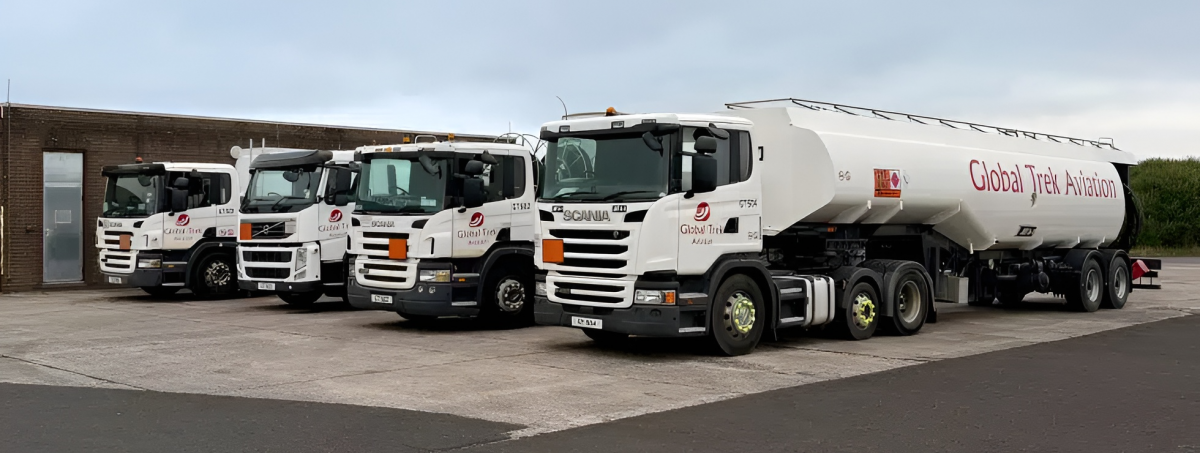
Northern Ireland-based aviation fuelling company Global Trek Aviation has expanded its refuelling fleet at Belfast International Airport with the addition of a fourth tanker, bringing combined on-wheels capacity to 140,000 litres of Jet A1 and F34/FSII fuel.
According to Business Air News, the expanded fleet enables multiple aircraft to be fuelled simultaneously, reducing turnaround times and improving operational flexibility for operators at the airport. The investment was made in direct response to increasing customer demand at the Belfast facility.
Global Trek Aviation said the addition of the fourth tanker reinforced its commitment to exceptional customer service and its focus on supporting the continued growth of aviation in Northern Ireland. The company said it remained committed to investing in its people, equipment and capabilities as air traffic at Belfast International continues to grow.
Belfast International Airport has seen sustained growth in both passenger and cargo traffic in recent years, with increasing demand from scheduled carriers, charter operators and military customers placing greater pressure on ground support infrastructure including fuelling capacity. The ability to service multiple aircraft concurrently is a critical operational requirement at busy airports where slot constraints and turnaround times directly affect airline scheduling efficiency.
Global Trek Aviation provides aviation fuelling services across its Belfast operation, offering Jet A1 for commercial jet aircraft and F34/FSII, a military-grade fuel additive formulation used primarily by defence and government operators. The company's capability to supply both fuel types from a single expanded fleet positions it to serve the full range of operators using Belfast International, from commercial airlines to military and special mission aircraft.
The investment reflects broader trends across UK regional airports, where ground handling and fuelling providers are expanding infrastructure capacity in response to post-pandemic traffic recovery and growing demand from low-cost carrier operations, charter services and freight activity at airports outside the major London hubs.








.png)