

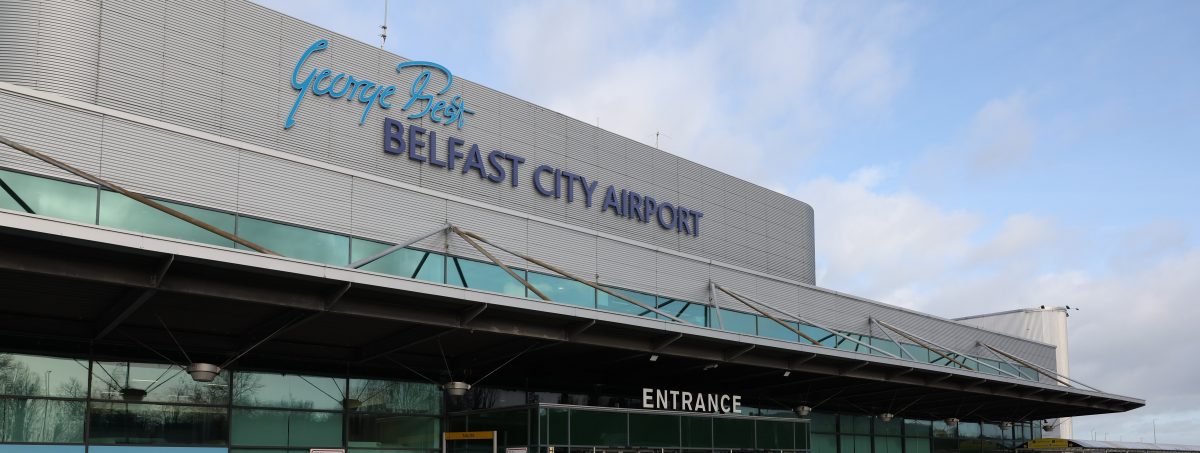
Belfast City Airport is seeking approval to raise its annual flight movement limit by 27%, to 61,000 from 48,000, and extend scheduled operations to 10:30pm. The changes form part of a Master Plan 2040 targeting 7 million passengers a year by 2040.
Belfast City Airport is located in Belfast, Northern Ireland, and is owned by a fund managed by private equity firm 3i. In its latest accounts, the airport reported turnover of £30.3 million, up 8% year on year, with operating profit rising to £5.2 million from £3.7 million.
The masterplan is accompanied by a £200 million ($273 million, 234 million euros) private investment programme covering terminal expansion, new aircraft stands, a multimodal forecourt, additional parking and a possible hotel, with no extension planned to the airport's existing 6,001 ft runway. It also safeguards space for a pedestrian link to a potential rail halt being explored with Translink.
BHD has submitted Proposal of Application Notices to Belfast City Council and Ards and North Down Borough Council, opening consultation on the infrastructure plans. The flight movement and operating hour changes will be assessed separately by Northern Ireland's Department for Infrastructure as amendments to the airport's Planning Agreement.
Departure capacity at BHD reached 951,900 seats in summer 2026, up 15% year on year, with UK routes accounting for more than 95% of scheduled capacity. Aer Lingus Regional remains the largest operator with 38% of capacity, ahead of easyJet on 294,900 seats and British Airways on 242,100 seats.
"Extended operating hours and increased annual traffic movement limits are critical for Belfast City Airport to be able to meet the forecast increase in demand for air travel," said chief executive Matthew Hall.
Hall said the draft infrastructure proposals had been designed to support growth "in a way that is balanced and mindful of our surroundings" and confirmed they exclude any runway extension. If delivered, the airport estimates the masterplan could add £1.7 billion annually to the Northern Ireland economy and support more than 23,000 jobs.
For the sector, the proposals mark one of the largest single infrastructure commitments at a Northern Ireland airport as regional passenger demand continues to build toward 2040.
Source: FlightGlobal / Aviation Week / Irish News






.png)